When may they be needed?
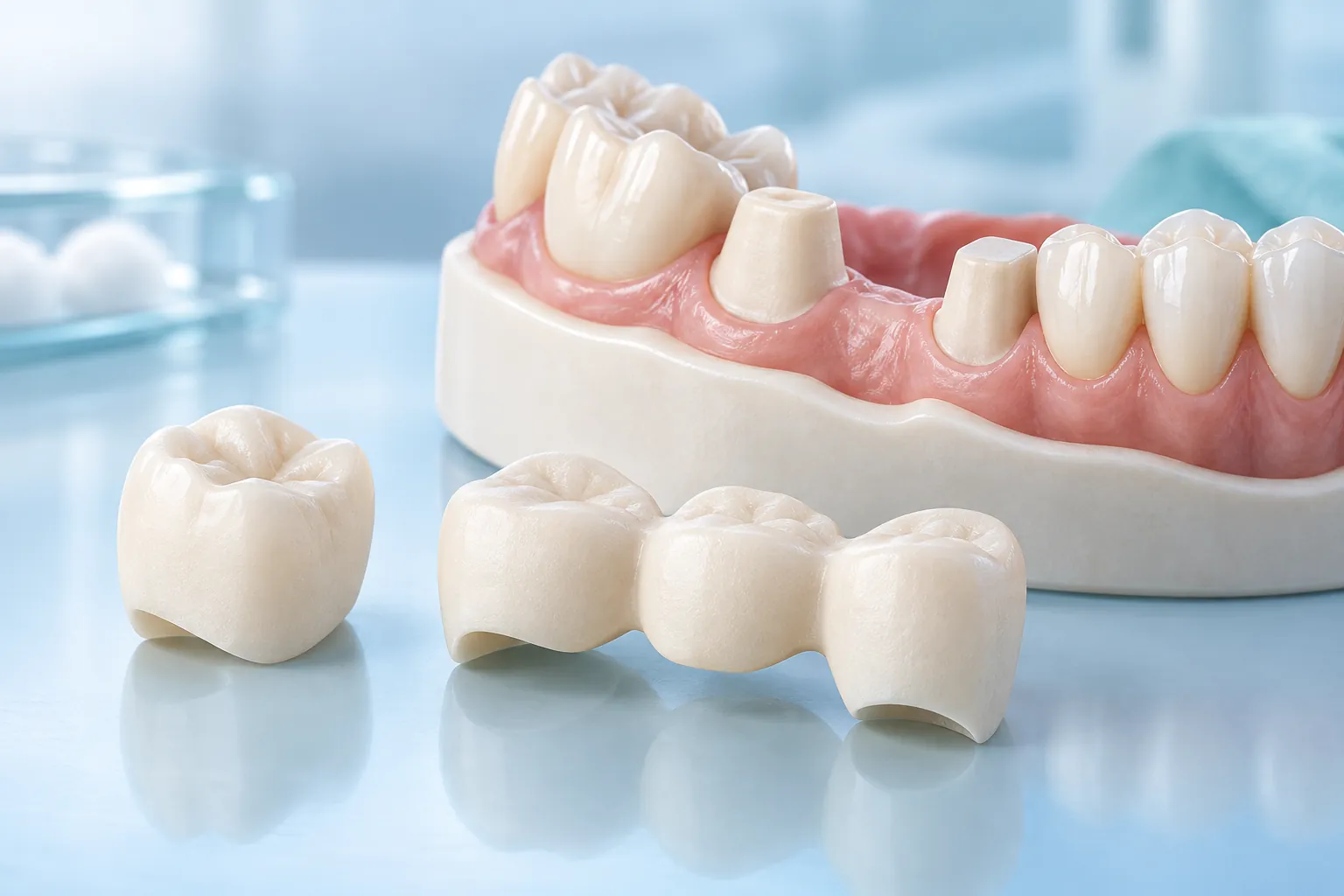
A temporary crown protects a tooth after preparation while the final crown is made. A temporary bridge or other prosthesis may support appearance, speech and some chewing between stages.
Its exact purpose and duration depend on the plan. A provisional restoration may not reproduce the strength, precision or appearance of the definitive one.
How it is planned
The dentist evaluates the prepared teeth, gums, bite, expected waiting period and goals of the provisional stage. It should protect tissues and allow monitoring before the next visit.
How it is fitted
After preparation, the area is recorded and a provisional restoration is made or selected. Margins, contacts and bite are checked, and it is secured so the dentist can later remove it.
At the next stage it is removed, teeth and gums are reviewed and planned treatment continues.
Benefits and limitations
A temporary restoration can protect sensitive surfaces, maintain space and help assess shape.
Its material and retention are designed for temporary use. Wear, cracking, color change or loosening can occur. Do not postpone the scheduled definitive stage.
Adaptation
Minor unfamiliarity, speech change or sensitivity may occur. A sharp edge, persistent pain, a high bite or gum pressure needs adjustment.
Care and food
Clean carefully and follow the individual instructions for between-tooth care. Avoid very hard or sticky foods that could fracture or dislodge it.
Do not test it with your fingers or use household glue.
When to contact the clinic
Call if it comes out, cracks, moves, interferes with the bite, injures the gum, or if increasing pain or swelling develops. Keep a detached restoration and bring it to the visit.
Frequently asked questions
Can I wear a temporary restoration for a long time?
Only for the period set by the dentist. Delay can affect teeth, gums and the fit of the final restoration.
What if it falls out?
Do not glue it yourself. Keep it and contact the clinic promptly.
Why can it look different from the final one?
A provisional restoration is made for intermediate goals and may differ in material, detail and retention.
This material is for general information. A dentist determines the final treatment option after an examination, diagnosis and discussion of suitable alternatives.
Sources
Need advice or an appointment?
Appointments every day, 09:00–23:30.