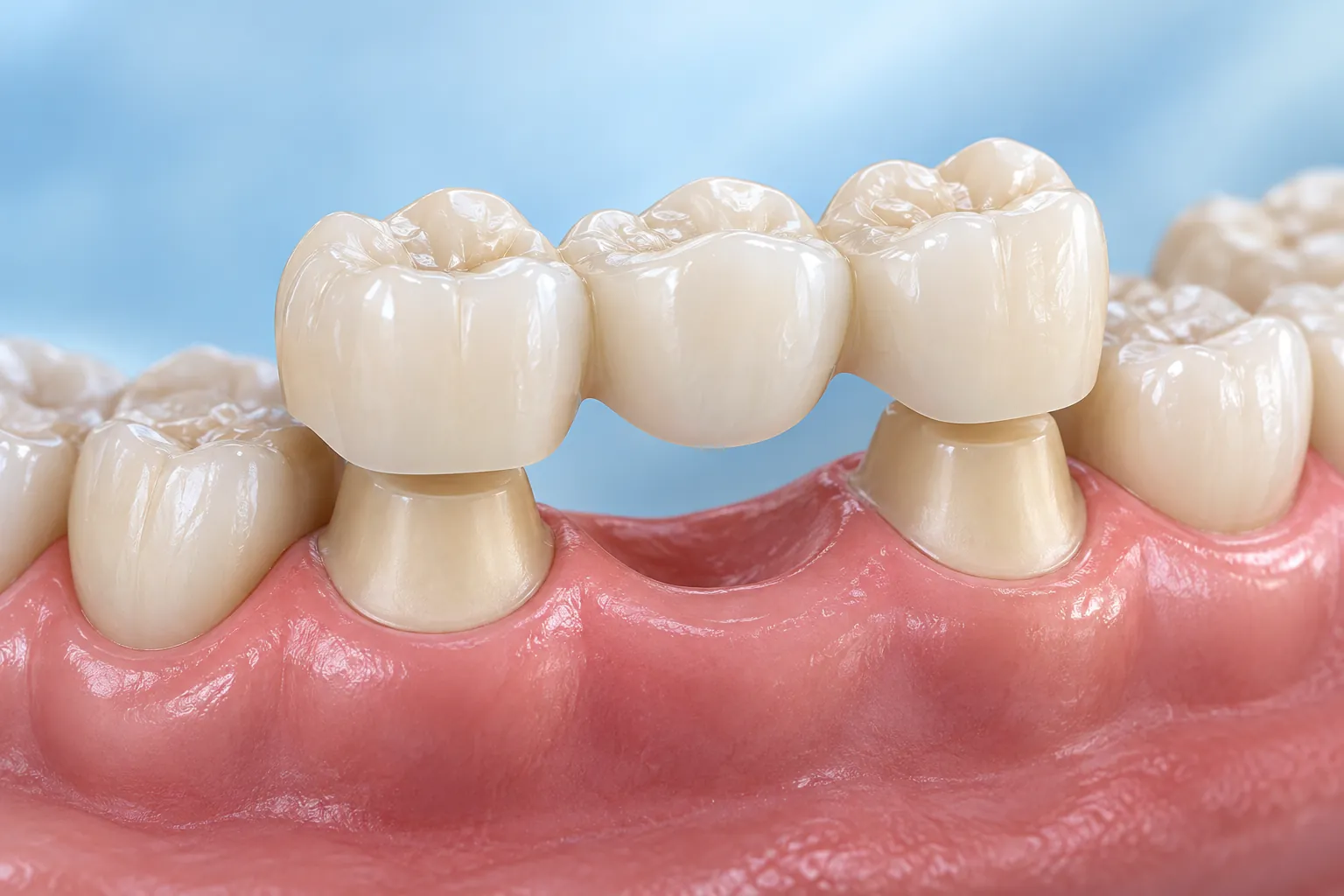
When may a bridge be considered?
A bridge may be considered when one or more neighboring teeth are missing and the chosen design can be supported reliably by adjacent teeth. The gap and supports must allow function without excessive loading.
A gap alone does not mean that a bridge is suitable. The dentist may also discuss removable or other replacement options.
Examination and planning
The dentist assesses gums, bite, gap size, roots and tissues around possible supporting teeth. X-rays are usually required.
Any disease in supporting teeth is addressed first. It is important to discuss how much healthy tooth structure a conventional bridge would change.
How a bridge is made
For a conventional bridge, supporting teeth are shaped for crowns and an impression or digital record is taken. A temporary bridge may be used while the final one is made.
Fit, shape, shade, gum contact and bite are checked before adjustments and final cementation.
Benefits and limitations
A fixed bridge is not removed by the patient and can restore continuity of the dental arch and chewing.
Preparing supporting teeth is irreversible. Possible problems include support overload, decay at margins, gum inflammation, chipping or loosening. Performance depends on the foundation and care.
Adapting to a bridge
Speech and chewing may feel different at first. Adaptation is expected, but pain, a high bite or persistent food trapping should be assessed.
How to clean it
In addition to normal brushing, clean under the replacement tooth every day with floss threaders or another aid recommended by the dentist.
Reviews help monitor the supporting teeth and gums hidden partly by the restoration.
When to seek a review
Contact the clinic if the bridge moves, chips, causes pain, swelling, bleeding, odor or a changed bite. Do not try to loosen or glue it yourself.
Frequently asked questions
Can I remove a fixed bridge myself?
No. A dentist removes it when clinically necessary.
Are a bridge and a crown the same?
No. A crown restores one tooth; a bridge replaces a missing tooth and has supports.
Why clean underneath?
Plaque and food can collect there and harm the gum and supporting teeth.
This material is for general information. A dentist determines the final treatment option after an examination, diagnosis and discussion of suitable alternatives.
Sources
Need advice or an appointment?
Appointments every day, 09:00–23:30.