When may it be considered?
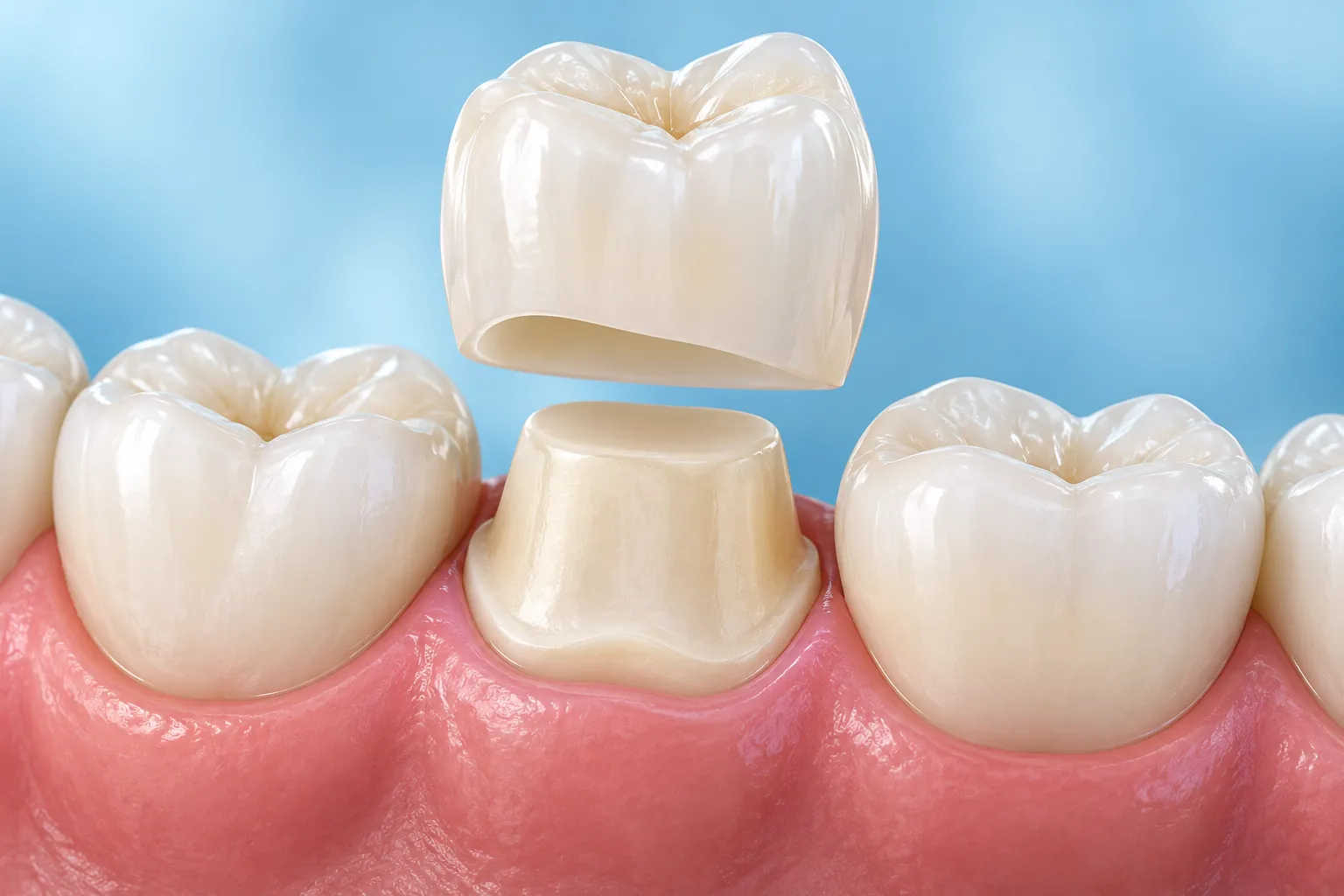
A crown may be considered for a tooth with extensive damage, a large filling, a crack, substantial wear, or a need to change shape and shade. It can sometimes protect a weakened root-filled tooth, but it is not automatically required after every root canal treatment.
For a smaller defect, a more conservative restoration may preserve more natural tooth tissue.
How suitability is assessed
The dentist examines the tooth and gums and evaluates the bite, remaining tissue and tooth position. An X-ray and preliminary treatment may be needed.
The material and design depend on biting forces, aesthetic needs, available thickness and the condition of neighboring teeth.
How it is made and fitted
The tooth is shaped and an impression or digital record is taken. A temporary crown may protect it while the definitive restoration is made.
At the fitting visit, the dentist checks fit, shade, shape and biting contacts before making adjustments and securing the crown.
Benefits and limitations
With no metal framework, ceramic can reproduce enamel-like color and light transmission. The final appearance still depends on ceramic type, restoration thickness and the underlying tooth shade.
Tooth preparation is irreversible. Ceramic can chip or fracture, the crown can loosen, and decay can develop at its edge. No result or service life can be guaranteed.
Adapting to the crown
The bite may feel unfamiliar and short-term sensitivity can occur. A crown that feels high, interferes with chewing or remains uncomfortable should be checked.
Care and longevity factors
Brush twice daily with fluoride toothpaste and clean between teeth every day. Do not use the crown to crack very hard objects.
Fit, tooth health, bite, grinding, hygiene and dental reviews all affect performance over time.
When to contact a dentist
Arrange a review for pain, swelling, odor at the margin, movement, a chip or a changed bite. Do not glue a loose crown back yourself.
Frequently asked questions
How is a crown different from a bridge?
A crown restores one existing tooth. A bridge replaces a missing tooth and is supported by neighboring teeth.
Is all-ceramic always the best option?
No. The choice depends on the tooth, biting forces, aesthetic goals and the clinical situation.
Can a tooth beneath a crown be treated?
A dentist assesses the problem; the crown sometimes has to be removed or replaced to provide care.
This material is for general information. A dentist determines the final treatment option after an examination, diagnosis and discussion of suitable alternatives.
Sources
Need advice or an appointment?
Appointments every day, 09:00–23:30.