When professional care is needed
Assessment is important for a deep or gaping wound, continuing bleeding, contamination, or injury to teeth and soft tissue. After a planned procedure, wound care and sutures may be part of the treatment.
Never try to stitch, deeply clean or cauterize an oral wound yourself. This may damage tissue and make assessment more difficult.
How the wound is assessed
The dentist asks when and how the injury occurred and checks bleeding, pain, numbness and possible tooth damage. The depth, edges and surrounding tissues are examined.
Imaging may be used when a tooth or bone injury is suspected. Treatment depends on the location, the time since injury and tissue condition.
Main treatment steps
The area is cleaned professionally, visible contamination is removed and the wound edges are assessed. Bleeding is controlled and the tissues are gently aligned.
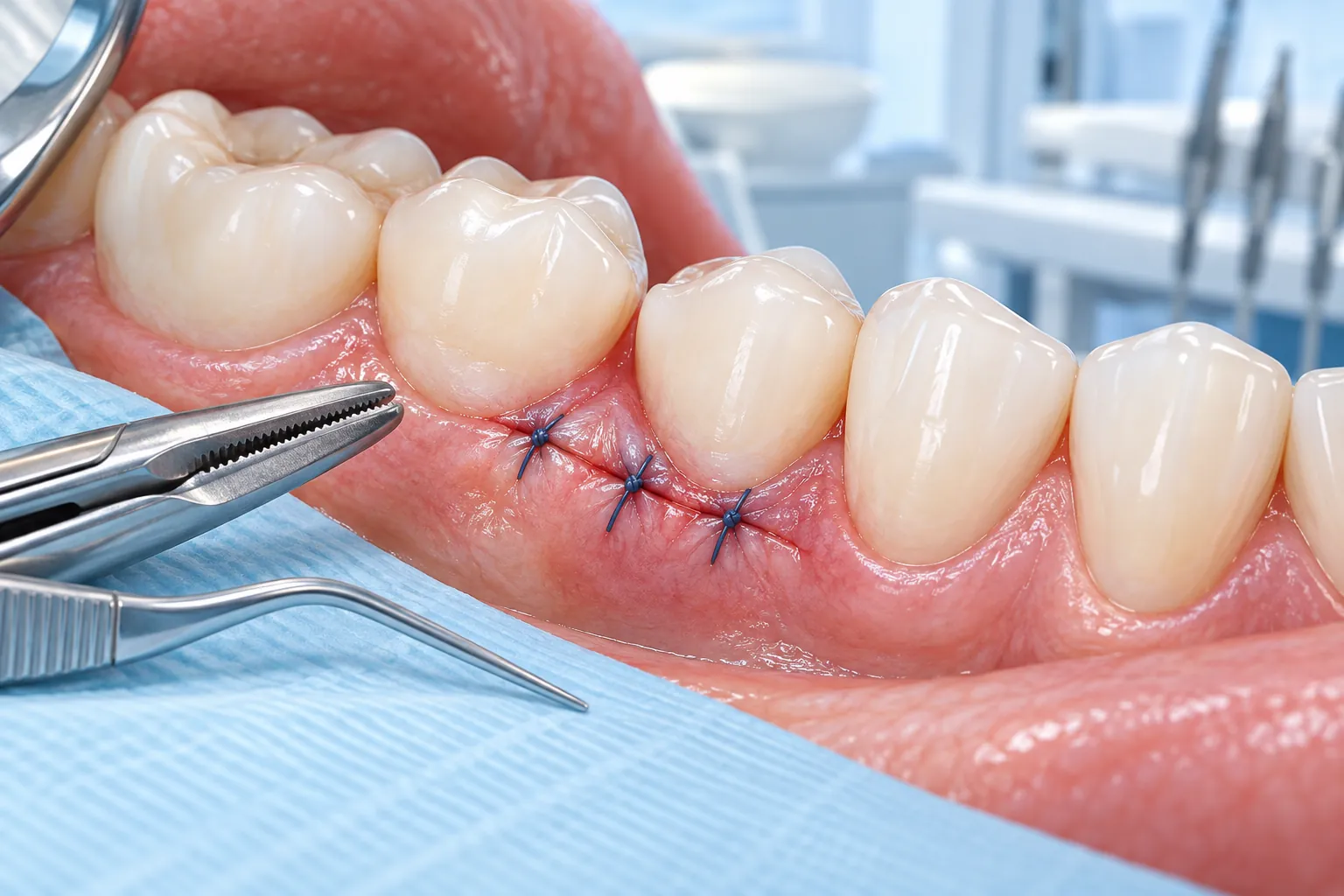
Sutures are placed only when they help hold the edges and protect the site. The material and whether removal is needed are decided by the clinician.
What may be felt afterwards
Mild soreness, swelling and a pulling sensation can occur. The wound changes appearance as it heals and this does not automatically mean a complication.
Increasing bleeding or swelling, fever, bad smell or taste, discharge, numbness or wound separation needs reassessment.
Looking after the wound
Do not pull sutures with the tongue, fingers or objects and never remove them yourself. Clean other teeth normally, but follow the specific instruction given for the wound area.
Choose food that will not traumatize the site, avoid heavy strain and smoking, and do not apply unfamiliar rinses or ointments.
Review and suture removal
Some sutures dissolve and others are removed at a scheduled visit. Review is useful even when the area feels comfortable.
If a suture loosens or falls out, do not pull the remaining thread. Contact the clinic and describe what happened.
What affects healing?
Wound size and location, time before treatment, infection, tissue blood supply, general health, smoking and aftercare all matter. The same healing time cannot be guaranteed for everyone.
Frequently asked questions
Do all sutures need removal?
No. It depends on the material; the dentist will explain whether they dissolve and when review is needed.
Can I clean a deep wound myself?
No. Home attempts can increase bleeding, introduce infection or damage tissue.
What if a suture feels uncomfortable?
Do not trim it yourself. Contact the clinic so the thread and wound can be checked.
This material is for general information. A dentist determines the diagnosis and final treatment plan after an examination. Do not try to open or drain an inflamed area, treat a deep wound, or remove sutures yourself.