Tooth extraction: when it may be needed and what to know afterward
Tooth extraction is a procedure in which a tooth is removed from the gum and bony socket. It is considered only after an examination, when the dentist assesses the tooth, surrounding tissues, and, where possible, options for preserving the tooth.
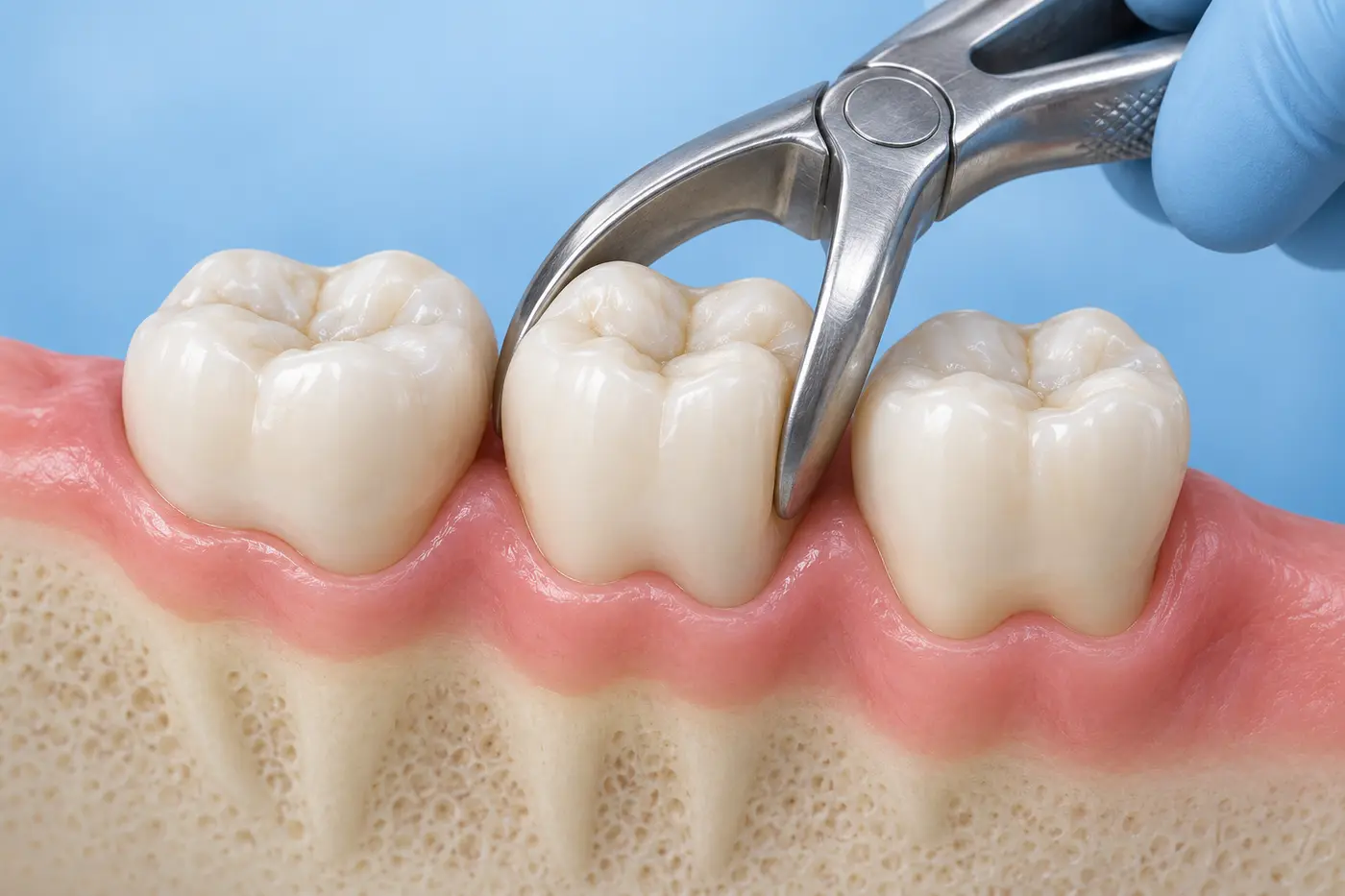
When might tooth extraction be considered?
Extraction may be discussed when the condition of the tooth or surrounding tissues calls for this approach. Reasons can include severe damage, extensive breakdown, infection, tooth mobility, or other clinical circumstances. A symptom on its own does not determine whether extraction is needed.
Why is the decision made after an examination?
The dentist assesses the remaining tooth structure, gums, surrounding bone, roots, and the overall clinical picture. Where possible, options for preserving the tooth are considered. The complexity of the procedure can vary, so its scope is determined individually.
How is the procedure usually performed?
The dentist usually examines the area, discusses the treatment plan, and completes the necessary preparation. The tooth is carefully released from surrounding tissues and removed according to the clinical situation. The dentist then provides individual aftercare advice.
Local anaesthesia and what the patient may feel
Extraction is usually performed with local anaesthesia to reduce or block pain sensation in the treatment area. You may still feel pressure, movement, or pulling during the procedure; tell the dentist if you feel pain or significant discomfort.
What happens after extraction?
After a tooth is removed, a blood clot forms in the socket. It takes part in the natural healing process and helps protect the area during early healing, so it is important not to disturb it.
Recommendations after the procedure
Follow the dentist’s individual advice. Do not touch the socket with your tongue or objects, do not rinse vigorously immediately after extraction, and avoid actions that might disturb the blood clot. While numbness remains, be careful with hot food and drinks. Keep your mouth clean without traumatizing the extraction area, and take medicines only as prescribed or recommended by the dentist.
When to contact a dentist again
Contact the clinic if bleeding does not lessen or becomes significant again, pain is getting stronger rather than settling, there is marked or increasing swelling, fever, worsening general health, an unpleasant smell or taste with pronounced pain, or any other symptom that concerns you.
The role of X-rays when needed
In a specific situation, the dentist may recommend a dental X-ray to assess the roots, surrounding tissues, and extraction planning. An X-ray is not required before every extraction.
Price at Dental Clinic Kapital 2022
Price — 4,000 AMD
The necessary scope of the procedure is determined after an examination. This price refers to the “Tooth extraction” price-list item and is not presented as a universal price for every clinical situation.
Local anaesthesia may be used at the dentist’s discretion, depending on the procedure and health history. The clinic also uses the DENCO E-MATE AI electronic injector. Electronic dental anaesthesia
Need advice or an appointment?
Appointments every day, 09:00–23:30.