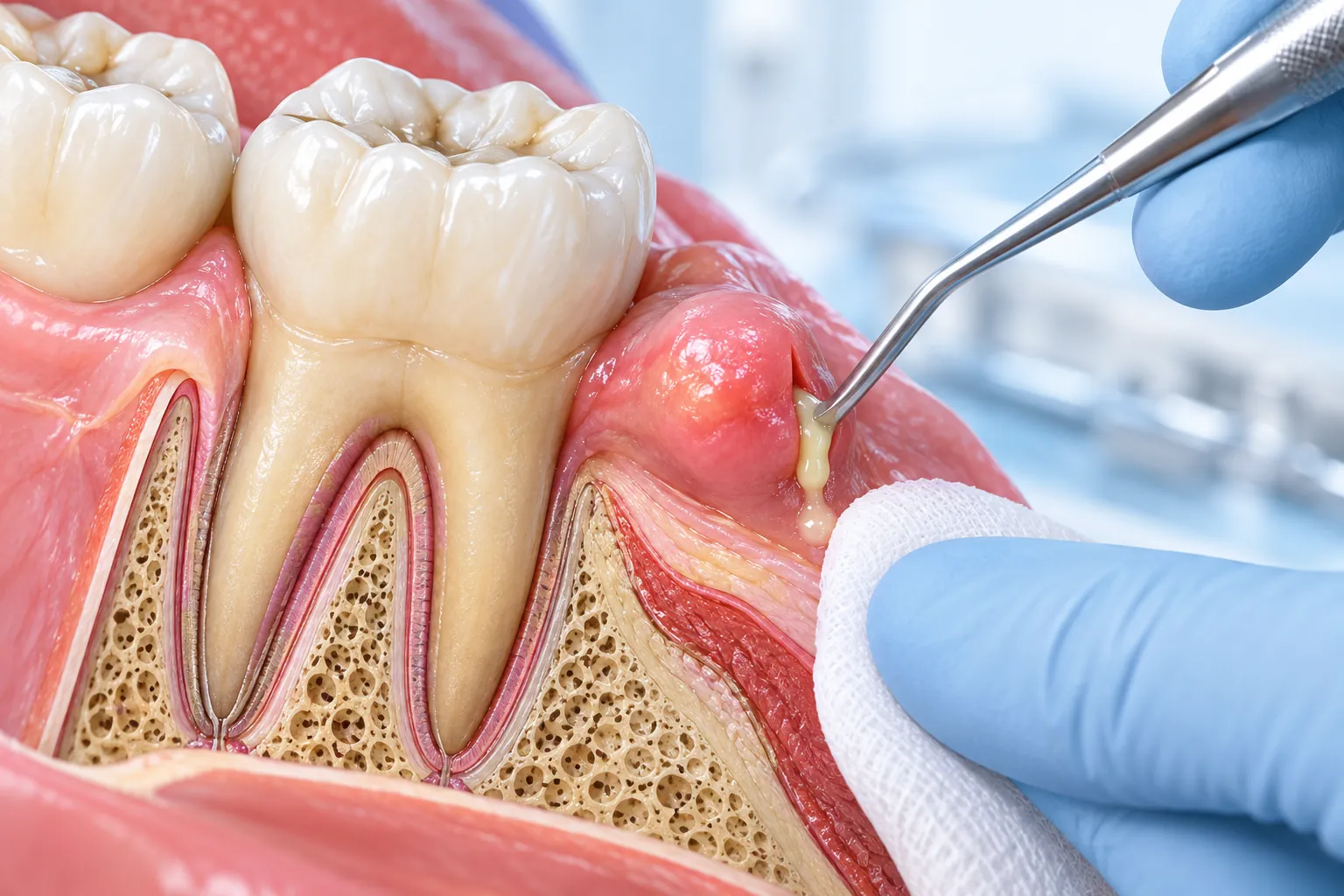
What is an inflammatory abscess?
It is a localized area of infection in soft tissue or near a tooth where inflammatory fluid may collect. It can arise from a diseased tooth, a gum problem, a partly erupted tooth or tissue injury.
Drainage alone is not always complete treatment. Further care depends on the source and on the condition of the tooth and surrounding tissues.
When to seek urgent assessment
See a dentist for increasing pain, gum swelling, a bad taste or discharge, or difficulty chewing or opening the mouth. Fever or feeling generally unwell also matters.
Rapidly spreading swelling of the face or neck, or difficulty breathing or swallowing, requires emergency medical care. Never puncture or squeeze the swelling yourself.
Examination and diagnosis
The dentist asks how the symptoms began and changed, then examines the teeth, gum and oral lining. Possible sources such as decay, tooth damage, a periodontal pocket or inflammation around an erupting tooth are assessed.
An X-ray may be needed. The treatment plan depends on the depth and spread of infection and the patient’s general health.
What treatment usually involves
After preparing the area, the dentist creates controlled access, allows drainage and cleans the site. A small drain may sometimes be left briefly, but this is decided case by case.
Treatment of the cause is then planned, which may involve the tooth, gum or another appropriate procedure. Medication is prescribed only when indicated and does not replace treatment of the source.
What may be felt afterwards
Tenderness, mild swelling and discomfort when chewing may occur. The dentist gives instructions for cleaning and follow-up.
Increasing pain, renewed swelling, fever, marked weakness, or difficulty swallowing or breathing needs immediate attention.
Care and short-term limits
Do not touch the site with fingers or objects, and do not adjust or remove a drain yourself. Follow only the cleaning, diet and medication instructions given for your case.
The area is usually protected from hard or irritating foods during the first days, and the review appointment should not be missed. Exact limits vary with the site and cause.
What determines further care?
The source of infection, the condition of the tooth, the spread of inflammation, other health conditions and the tissue response after drainage all affect the plan. Healing time and outcome cannot be guaranteed in advance.
Frequently asked questions
Can I open the swelling at home?
No. This can spread infection, injure tissue and delay proper care.
Are antibiotics alone enough?
Not always. The dental source may require direct treatment; a clinician decides whether medication is indicated.
Why is a follow-up visit needed?
It checks that inflammation is settling, the drainage site is healing and the cause has been addressed.
This material is for general information. A dentist determines the diagnosis and final treatment plan after an examination. Do not try to open or drain an inflamed area, treat a deep wound, or remove sutures yourself.
Sources
Local anaesthesia may be used at the dentist’s discretion, depending on the procedure and health history. The clinic also uses the DENCO E-MATE AI electronic injector. Electronic dental anaesthesia
Need advice or an appointment?
Appointments every day, 09:00–23:30.