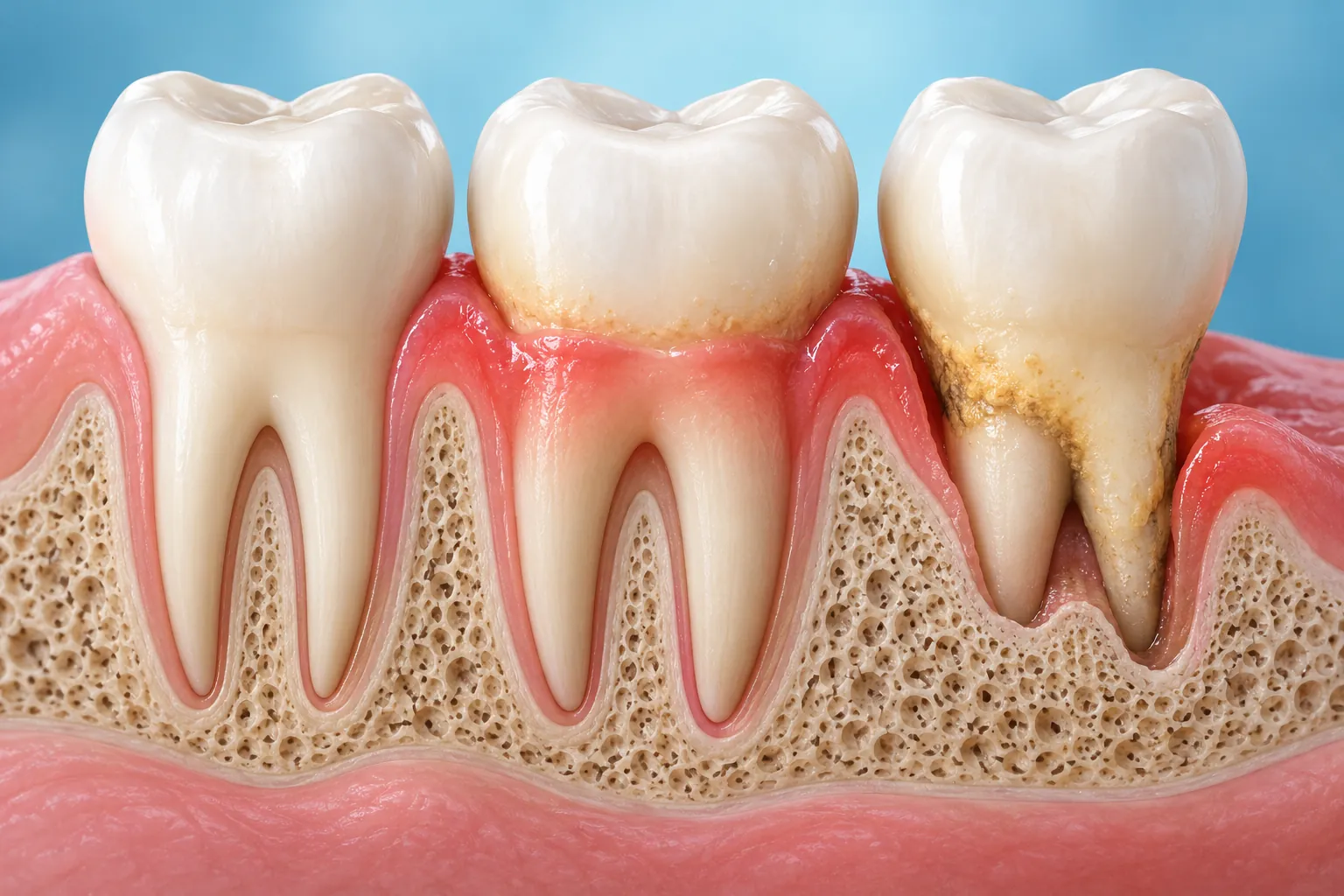
What are gum and periodontal diseases?
The gum is part of the tissues that surround and support a tooth. Gingivitis is inflammation limited mainly to the gum, often causing redness, swelling and bleeding without loss of the tooth’s bone support.
Periodontitis is deeper disease. Abnormal pockets may form between gum and tooth, and the supporting ligament and bone can be damaged over time. The two conditions do not require identical care.
Symptoms worth checking
Bleeding during cleaning, red or swollen gums, tenderness, persistent bad breath or taste, receding gums and exposed sensitive root surfaces should be assessed.
Loose teeth, changing spaces or an altered bite may suggest more advanced damage. Gum disease can progress with little pain, so lack of severe discomfort does not rule it out.
What an examination may include
The dentist asks about symptoms, home care, tobacco use, medicines and health conditions that may affect the gums. The examination looks for plaque, calculus, bleeding, recession and tooth mobility.
The space between gum and tooth may be measured, and X-rays may be used to assess bone support. A diagnosis cannot be made reliably from a photograph or description alone.
Professional cleaning and deposit control
Daily care can remove soft plaque, but hardened calculus cannot be brushed away. Professional cleaning removes deposits and helps create conditions in which inflammation can be controlled.
For early surface inflammation, cleaning and improved home care may be central. Deeper pockets can require more than a routine cleaning.
Treatment options depend on findings
The plan depends on disease depth, deposits, root surfaces, bone support and risk factors. It may include cleaning above and below the gumline, deeper root-surface treatment, personalized hygiene instruction and reassessment.
Medicines are used only when indicated as part of professional care, not as a substitute for removing the cause. If non-surgical care is insufficient or access is limited, surgical treatment may be discussed.
Home care and slowing progression
Brush twice daily with a soft brush and fluoride toothpaste. Clean between teeth every day with floss or an appropriately sized interdental aid recommended for your mouth.
Do not stop gentle cleaning simply because the gum bleeds, but avoid damaging pressure. Avoiding tobacco and managing relevant health conditions may also matter.
Why maintenance visits matter
After initial care, the dentist reviews bleeding, pocket depths, home plaque control and tooth stability. Periodontitis often needs continuing maintenance at an interval chosen for the individual.
Seek earlier care for increasing swelling, discharge, worsening pain, fever or a noticeable increase in tooth mobility.
Frequently asked questions
Is bleeding from the gums normal?
Repeated bleeding is not considered normal and commonly signals inflammation. An examination is needed to identify the cause.
Can periodontitis be treated with home cleaning alone?
Home care is essential but cannot remove calculus or deposits in deep pockets. Professional care depends on the findings.
Is surgery always required?
No. Many cases begin with non-surgical care. Surgery is considered only for specific indications.
This material is for general information and does not replace an examination. A dentist determines the diagnosis and individual treatment plan. Do not use medicines or topical products without professional advice.