Why surgery may be considered
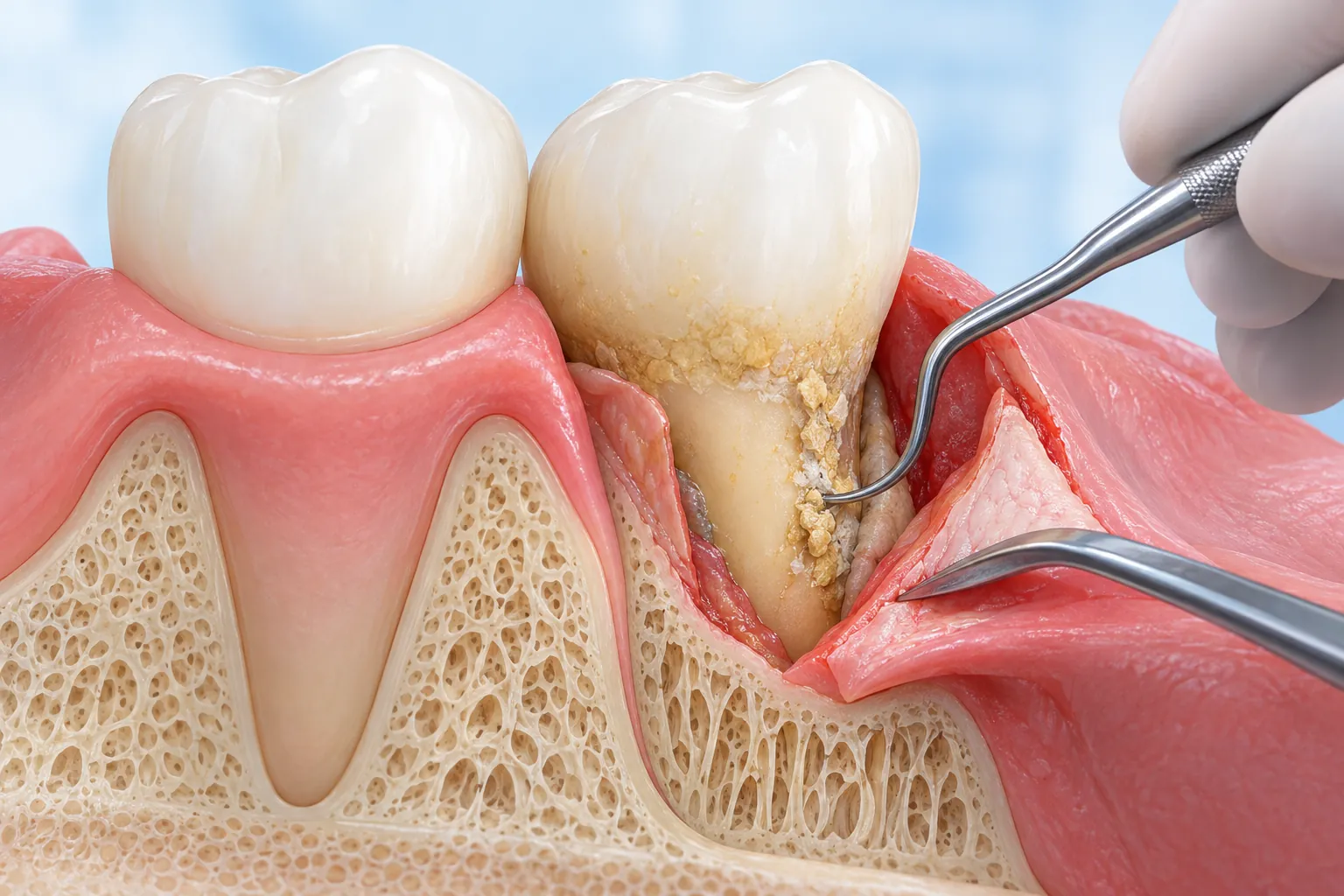
Periodontitis can create deep spaces between tooth and gum where bacterial deposits are difficult to control. Supporting tissues may be lost, the gum contour may change and teeth may become mobile.
Surgery does not replace daily cleaning or initial professional treatment. The response to earlier care is considered before a decision.
Symptoms that need assessment
Bleeding, swelling, persistent bad breath, pus between tooth and gum, receding gums, tooth mobility or a change in the bite should be assessed. Significant disease may exist without severe pain.
A sudden increase in swelling, fever or feeling unwell needs more urgent evaluation.
Diagnosis and planning
The dentist checks the gums, pocket depths, bleeding, mobility, oral hygiene and restorations. X-rays help assess the supporting bone.
The extent of surgery depends on disease distribution, local anatomy, tooth condition, general health and the ability to maintain plaque control.
What treatment usually involves
The purpose is to gain access to root surfaces and inflamed tissue that cannot be reached adequately, clean the area and create a form that is easier to maintain. The specific method depends on the clinical situation.
The tissues are then returned to the planned position and may be secured with sutures. Not every surgical option is suitable for every patient.
What may be felt afterwards
Soreness, swelling, slight bleeding and temporary sensitivity of exposed tooth surfaces can occur. The appearance in the first days is not the final result.
Heavy or persistent bleeding, increasing swelling, fever, discharge or a marked deterioration requires contact with the clinic.
Care and limits
Follow individual instructions for cleaning, food and prescribed products. Do not repeatedly pull the lip or cheek to inspect the wound, touch sutures or smoke.
Avoid trauma to the area and strenuous activity until advised. Continue hygiene in the rest of the mouth.
Long-term maintenance
After healing, supportive professional care, daily cleaning and pocket monitoring remain essential. Surgery can help control disease but cannot remove the risk of recurrence without ongoing care.
Frequently asked questions
Does everyone with periodontitis need surgery?
No. It is considered after diagnosis and review of the response to initial treatment.
Will the gum look different?
The contour and position of tissue may change. The expected effect is discussed before treatment.
Can professional maintenance stop after surgery?
No. Ongoing maintenance is central to controlling periodontal disease.
This material is for general information. A dentist determines the diagnosis and final treatment plan after an examination. Do not try to open or drain an inflamed area, treat a deep wound, or remove sutures yourself.
Sources
Local anaesthesia may be used at the dentist’s discretion, depending on the procedure and health history. The clinic also uses the DENCO E-MATE AI electronic injector. Electronic dental anaesthesia