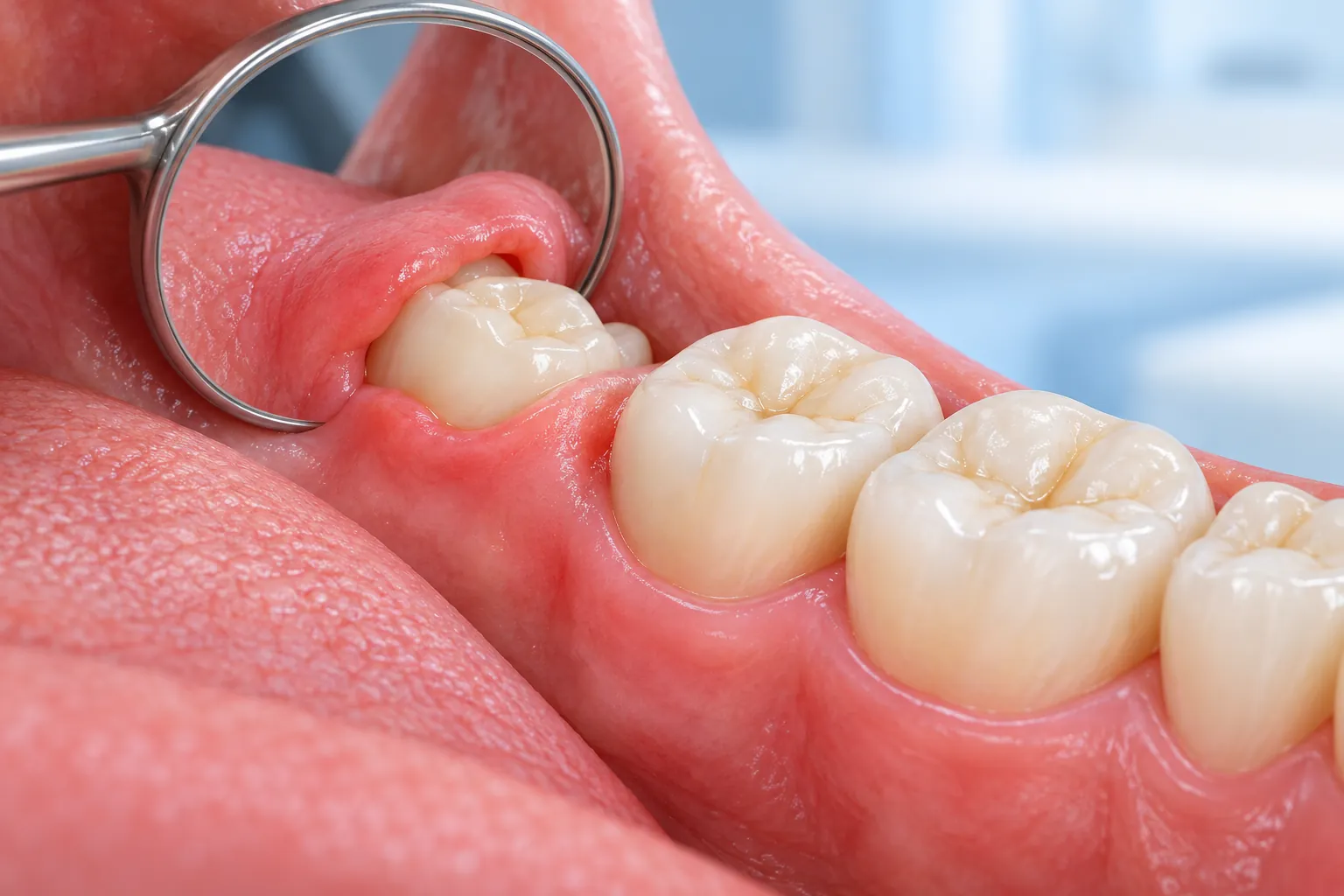
What local gum inflammation means
Redness, swelling and tenderness can develop at the gum margin, between teeth or around a partly erupted tooth. The visible area may be small even when the source lies in the tooth or deeper under the gum.
It is important to distinguish surface irritation from an abscess, periodontal disease or a problem at the tooth root.
Symptoms that need attention
Arrange an examination for pain, swelling, bleeding, unpleasant smell or taste, discharge, difficulty chewing or inflammation that returns in the same place.
Fever, rapidly increasing swelling, or difficulty opening the mouth, swallowing or breathing requires urgent assessment.
How the area is assessed
The dentist examines the tooth and surrounding gum, looking at plaque, pockets, contact with neighbouring teeth, restorations and eruption. Trauma from the opposing tooth and signs of infection are also considered.
An X-ray may be needed to assess tooth position, decay, bone or the root area.
Treatment options
Care depends on the cause. A difficult area may be cleaned professionally and a local irritant addressed; a problem in the tooth or restoration requires its own treatment.
Around a partly erupted tooth, ease of cleaning and the risk of recurrence are considered. Do not cut the gum, squeeze a swelling or start antibiotics yourself.
What may be felt afterwards
The area can remain tender after cleaning or another procedure. It should gradually settle, although the time varies with the cause and treatment.
Increasing pain, discharge, swelling or fever is a reason to contact the dentist before the planned review.
Care during the first days
Clean gently but do not stop oral hygiene completely. Use only the products and technique advised for your case. Avoid hard food that traumatizes the area and never probe under the gum with sharp objects.
Daily hygiene and review are important once the acute inflammation settles, especially if episodes recur.
When another visit is needed
Return if symptoms come back, bleeding or a bad taste persists, mouth opening becomes limited, or the area remains difficult to clean. The dentist can reassess whether the cause needs further treatment.
Frequently asked questions
Should I brush the inflamed gum harder?
No. Heavy pressure may injure it. Gentle regular cleaning and advice after an examination are safer.
Why does the inflammation return?
A partly erupted tooth, a hard-to-clean area, a contact or restoration problem, or another cause may remain.
Is an X-ray always needed?
No. It is used when the tooth, root, bone or position of an unerupted portion needs assessment.
This material is for general information. A dentist determines the diagnosis and final treatment plan after an examination. Do not try to open or drain an inflamed area, treat a deep wound, or remove sutures yourself.