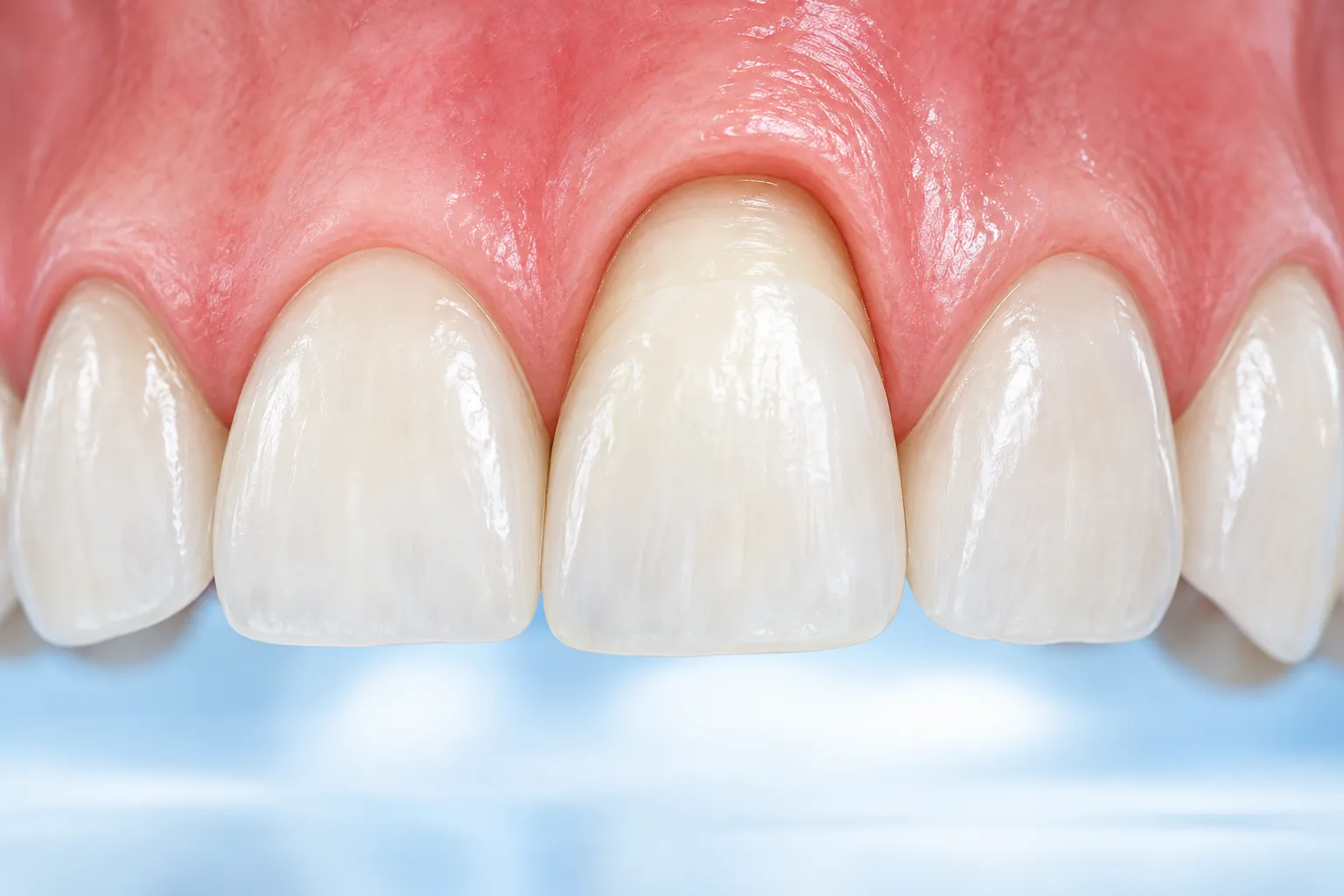
When it may be considered
Functional crown lengthening may be used when decay, a fracture or the edge of a planned restoration lies deep below the gum and access to healthy tooth structure is needed.
It can also be discussed for an uneven gum line or teeth that appear short. The purpose and extent are agreed before treatment.
Reasons for consultation
A tooth broken near the gum, repeated failure of a restoration, inflammation around a deep margin or concern about the gum contour may lead to an assessment.
The need cannot be judged by appearance alone. The root, bone, bite and future restoration all matter.
Examination and planning
The dentist evaluates the tooth, gum, sulcus depth, bone level, crown-to-root relationship, smile line and neighbouring teeth. An X-ray is commonly needed.
When a crown or another restoration is planned, the surgical and restorative stages are coordinated. Not every tooth is suitable.
What the procedure involves
The gum tissue is carefully repositioned and reshaped to expose the required tooth structure. In some situations the surrounding bone level is also adjusted; this depends on anatomy and purpose.
The gum is returned to the planned position and may be secured with sutures. Timing of the final restoration is decided after healing is assessed.
What may be felt afterwards
Soreness, swelling, slight bleeding and temporary sensitivity of the newly exposed tooth surface can occur. The tooth may initially look longer while tissues continue to settle.
Heavy or persistent bleeding, increasing swelling, fever, discharge or marked pain requires contact with the clinic.
Care and limits
Do not touch the wound or sutures or repeatedly pull the lip to inspect it. Follow individual advice for diet, cleaning and any prescribed products, while maintaining hygiene elsewhere.
Avoid trauma, smoking and strenuous activity during the early phase. Do not proceed with the final restoration before the gum has been reviewed.
What affects the result?
The reason for treatment, root and bone condition, tooth position, smile line, oral hygiene and healing response all matter. Neither the appearance nor the lifespan of a future restoration can be guaranteed.
Frequently asked questions
Is bone always adjusted?
No. It depends on the relationship between the planned restoration margin and the bone, and on the aim of treatment.
When can a permanent crown be placed?
The dentist decides after reviewing healing and the stability of the gum margin.
Can the tooth feel sensitive?
Temporary sensitivity is possible because more tooth surface is exposed; its intensity varies.
This material is for general information. A dentist determines the diagnosis and final treatment plan after an examination. Do not try to open or drain an inflamed area, treat a deep wound, or remove sutures yourself.