Treatment of 2–4 root canals: how multi-canal root canal treatment works
Some teeth contain several root canals rather than one. When the pulp is inflamed or infected, each canal that is identified needs to be found, cleaned, shaped, and filled during treatment.
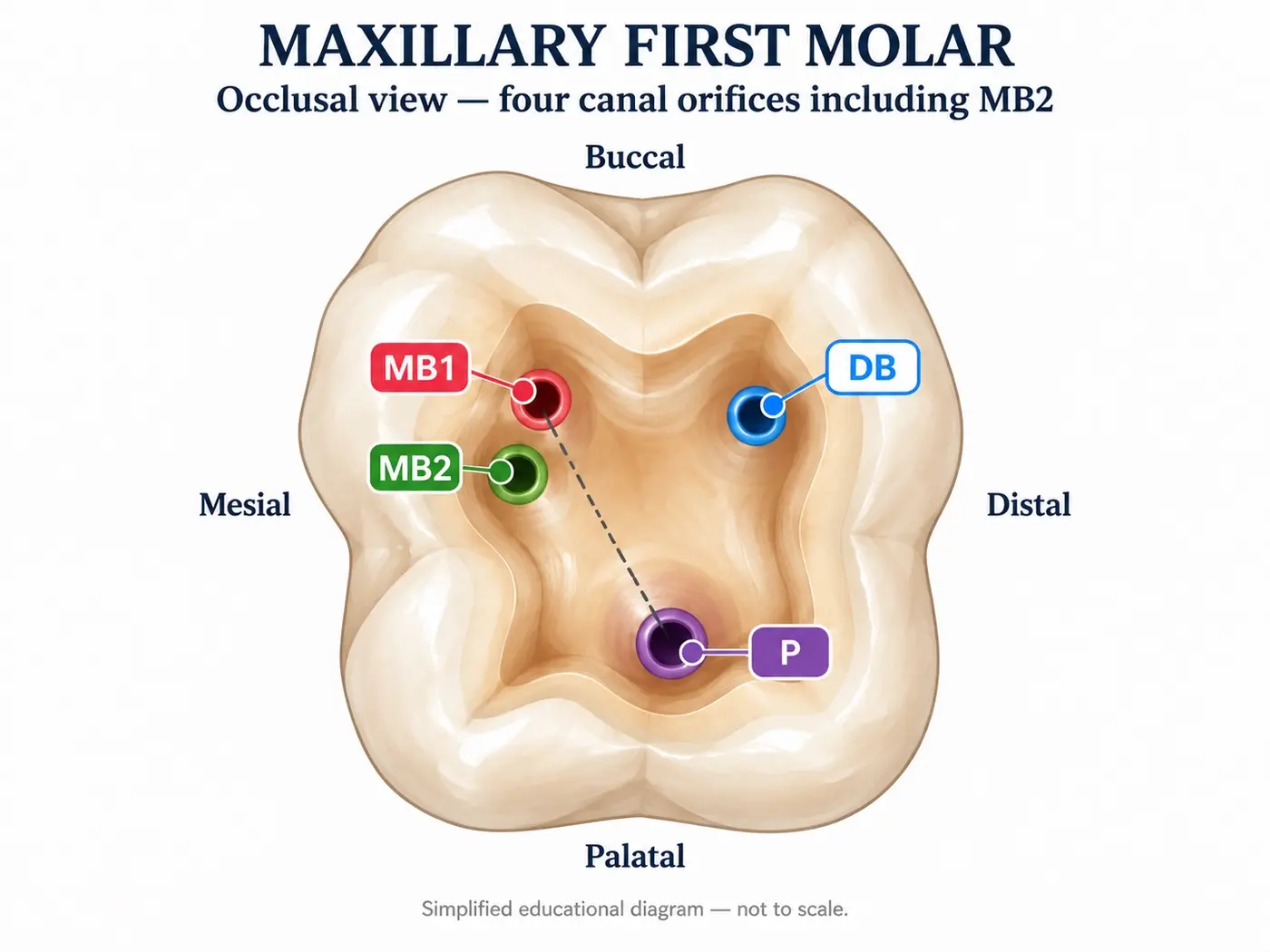
What root canals are
The pulp chamber in the crown of a tooth continues into narrow spaces inside the roots called root canals. The pulp contains nerve fibres and blood vessels. The everyday phrase “nerve treatment” is used in the price list as a plain-language name for endodontic treatment.
Why one tooth may have several canals
The number and shape of roots and canals vary between teeth and sometimes between teeth of the same type. Canals may be narrow, curved, join together, or branch. A patient cannot reliably determine the number; the dentist assesses the anatomy. A tooth with one canal has a separate price-list item and article.
When treatment may be needed
Multi-canal treatment may be considered when the pulp is irreversibly inflamed or infected, for example because of deep decay, a crack, or trauma. Possible symptoms include spontaneous pain, pain when biting, prolonged sensitivity to heat or cold, gum swelling, or a change in tooth colour. Diagnosis is based on an examination and any investigations the dentist considers necessary.
How the dentist assesses root anatomy
The dentist combines findings from the examination, tooth shape, canal openings, and appropriate images. Together, these sources help define the anatomy that needs treatment. No single sign or conventional image guarantees that every small branch will be visible.
How 2–4 canals are treated
Local anaesthesia is used when appropriate, the tooth is isolated, and an opening is made to reach the pulp chamber. The dentist locates the entrances to the canals that are found, establishes a working path, and cleans and shapes each canal. Treating several narrow or curved canals is usually more technically demanding than treating one canal, but the number of canals alone does not determine the prognosis. The number of visits depends on the clinical situation.
Cleaning, shaping, and filling every canal
Inflamed or infected contents are removed from each identified canal. The spaces are treated to reduce microbial contamination and shaped for filling. The canals are then filled and sealed with a suitable material to limit recontamination.
The role of dental X-rays
When clinically indicated, a dental X-ray may help assess roots, surrounding tissues, and selected stages of treatment. It provides useful information, but a conventional two-dimensional image may not show the entire complex three-dimensional canal system.
Restoring the tooth after treatment
After endodontic treatment, the access opening and crown of the tooth need restoration. This price-list item includes a light-cured composite filling, but a filling alone may be insufficient when much of the tooth is missing. The dentist selects the final restoration according to the remaining tooth structure and biting load.
What you may feel after treatment
Mild tenderness or sensitivity when biting may occur for a period after treatment. Follow the dentist’s individual instructions and protect the tooth until its final restoration is complete.
When to contact the dentist again
Contact the clinic if pain becomes worse or does not settle, swelling or fever develops, the bite feels uncomfortable, or a temporary material is lost. A dentist can advise how urgently you need to be seen.
Price at Dental Clinic Kapital 2022
Price — 20,000 AMD
This price applies to “Filling + root canal treatment (2–4 canals)”. It does not apply to one-canal treatment, retreatment, a crown, surgical procedures, or other additional services. The final scope of treatment is determined after an examination.
Local anaesthesia may be used at the dentist’s discretion, depending on the procedure and health history. The clinic also uses the DENCO E-MATE AI electronic injector. Electronic dental anaesthesia
Need advice or an appointment?
Appointments every day, 09:00–23:30.