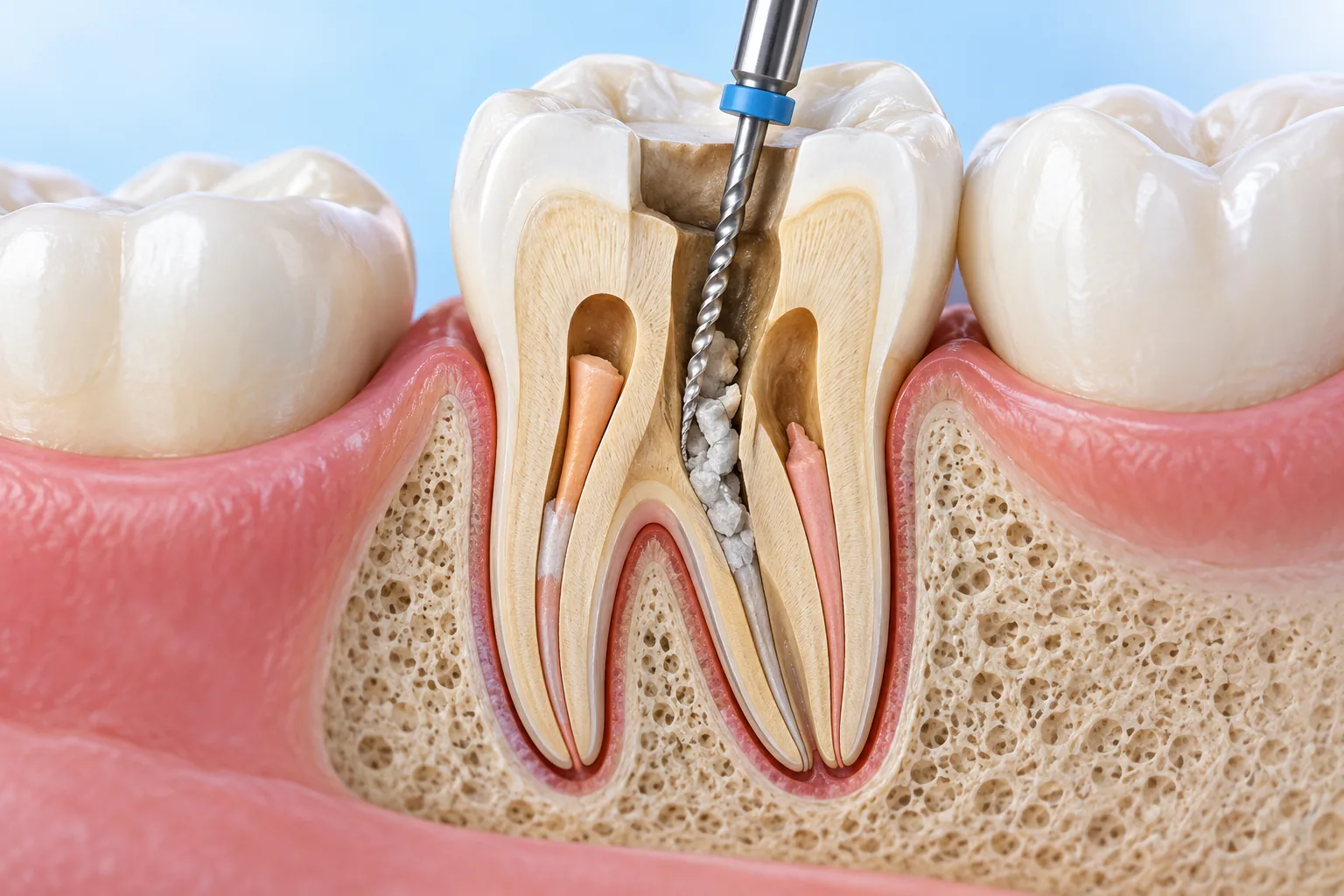
What is root canal retreatment?
It is a second endodontic procedure on a tooth whose canals have already been treated. The clinician regains access, removes old filling material, cleans the accessible canal spaces and seals them again.
Whether retreatment is possible and appropriate is assessed individually for each tooth.
When might it be needed?
Reasons for assessment include pain that persists or returns, tenderness on biting, a recurring spot on the gum, swelling or a change seen on an X-ray. Some teeth have no symptoms.
A narrow canal may have been missed, or new decay, a leaking or damaged filling or crown, or a crack may have allowed a new problem to develop.
How is the problem diagnosed?
The dentist reviews symptoms and the previous treatment, examines the tooth, checks biting and tapping tenderness, and assesses the gum and restoration. An X-ray is usually needed.
Other options are discussed if the tooth cannot be restored reliably or a deep crack is suspected.
Main treatment steps
After local anaesthetic, the tooth is isolated and access to the canals is reopened. An old restoration may need to be removed or opened. Previous filling material is taken out, and the canals are cleaned, shaped and filled again.
A temporary filling may be placed before the planned permanent restoration. The number of visits depends on canal anatomy, the extent of infection and how accessible the previous materials are.
What may be felt afterwards?
The tooth and surrounding tissues may feel tender for a few days, particularly if pain or inflammation was present beforehand. Follow the instructions given for your individual case.
Severe or increasing pain, swelling, fever, inability to bite normally or loss of a temporary filling requires prompt contact with the clinic.
Care and follow-up
Avoid very hard chewing on the tooth until the permanent restoration is complete. Brush and clean normally, taking care around the treated area.
A permanent filling or other restoration helps protect the tooth from reinfection and fracture. The dentist will advise when review is needed.
What determines the extent of treatment?
Important factors include the number and shape of the canals, old filling materials or a post, the condition of the crown or filling, the size of the inflammatory area and whether the tooth can be restored. No outcome can be guaranteed in advance.
Frequently asked questions
Is retreatment the same as the first procedure?
The goal is similar, but retreatment is often more complex because previous materials must be removed and untreated areas may need to be located.
Does a crown always have to be removed?
Not always. The access route depends on the crown, filling and internal restoration and is decided after examination and imaging.
What if the tooth does not hurt?
A lack of symptoms does not rule out a problem. An X-ray finding is interpreted together with the examination and other information.
This material is for general information. A dentist determines the diagnosis and final treatment plan after an examination and discussion of the available options.
Sources
Local anaesthesia may be used at the dentist’s discretion, depending on the procedure and health history. The clinic also uses the DENCO E-MATE AI electronic injector. Electronic dental anaesthesia
Need advice or an appointment?
Appointments every day, 09:00–23:30.