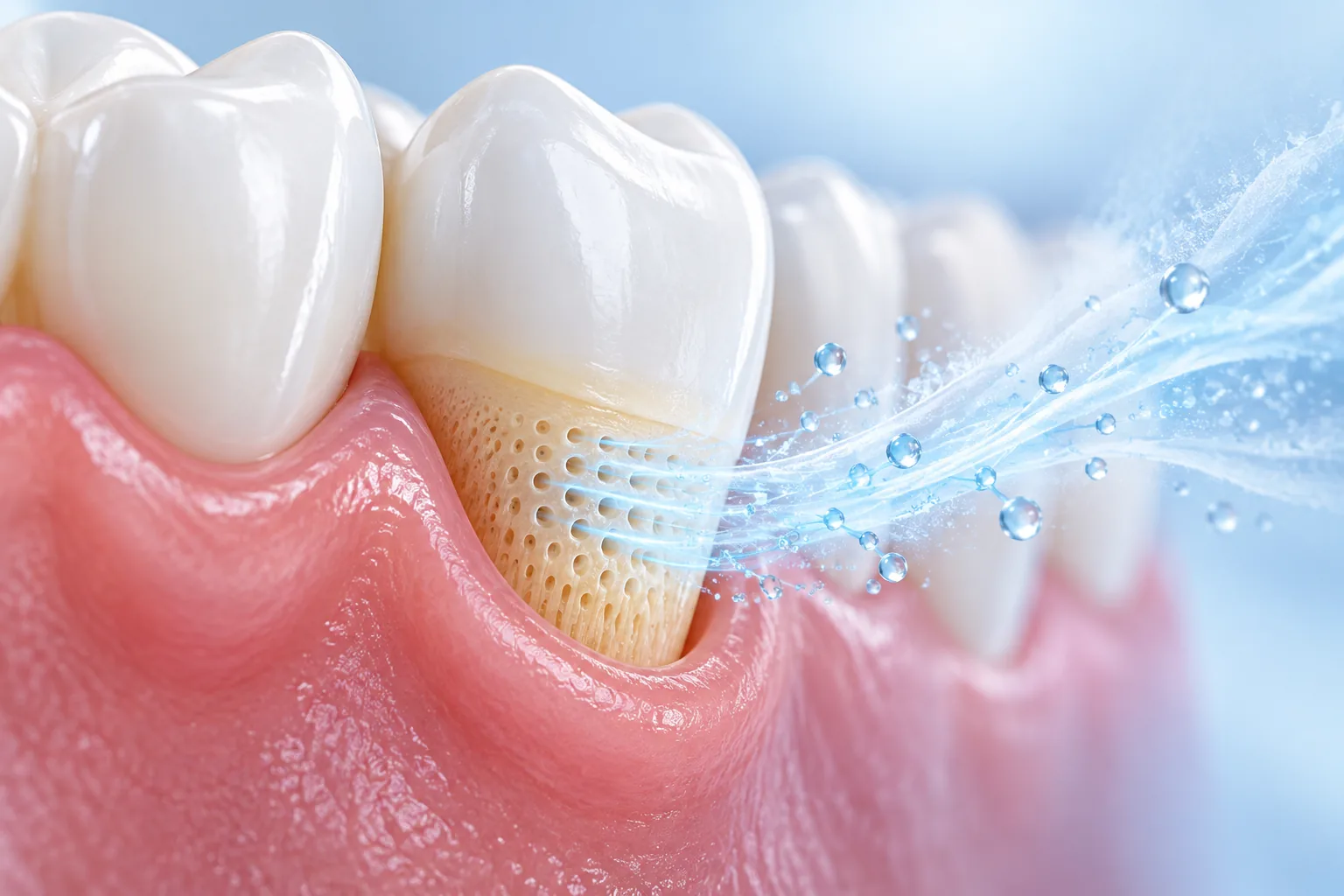
Why does a tooth become sensitive?
When enamel wears or the gum recedes, dentine can become exposed. Tiny channels in dentine transmit an outside stimulus towards the inner tooth, producing a short sharp pain.
Decay, a crack, a worn or damaged filling, tooth clenching, recent dental treatment or gum problems can cause a similar response.
Symptoms that matter
Dentine sensitivity usually causes brief sharp pain that stops when the trigger is removed. Pain that lingers, starts by itself, worsens at night or occurs with swelling needs prompt assessment.
Sensitivity affecting several teeth and pain focused in one tooth may have different causes.
How is it diagnosed?
The dentist asks what triggers the pain and how long it lasts, then checks for decay, cracks, fillings, gum recession and signs of forceful brushing. Responses to cold, air, touch or biting may be tested.
X-rays are used when indicated to look for hidden decay, a problem under a filling or changes around a root.
Main treatment options
If exposed dentine is the cause, the dentist may recommend fluoride toothpaste for sensitive teeth and a gentler brushing technique. A protective agent may be applied to the exposed area in the clinic.
Decay, a crack, a damaged filling or gum disease requires treatment of that cause. There is no single treatment for every case.
What determines the extent of treatment?
It depends on how many teeth are affected, how long pain lasts, the condition of enamel and gums, the presence of decay or cracks, the bite and daily habits. Progress may be reviewed in stages.
Care and what to expect
Use a soft toothbrush without heavy pressure. Choose fluoride toothpaste and follow professional advice on how to use a sensitivity product. Do not brush immediately after acidic food or drinks.
Improvement may be gradual rather than immediate. If sensitivity continues or becomes stronger, the cause should be reassessed.
When to return
Arrange another visit if pain lingers after the trigger, disturbs sleep, occurs on biting, is focused in one tooth, or is accompanied by a crack, swelling or bleeding gums.
Frequently asked questions
Does sensitivity toothpaste work immediately?
Not always. Some products need consistent use before their effect can be assessed. Follow the product instructions and your dentist’s advice.
Should I avoid all cold foods?
Obvious triggers can be limited temporarily, but it is important to identify the cause rather than only avoid discomfort.
Does sensitivity mean I have decay?
Not always. Exposed dentine is a common reason, but decay should be ruled out during an examination.
This material is for general information. A dentist determines the diagnosis and final treatment plan after an examination and discussion of the available options.