What is an aesthetic restoration?
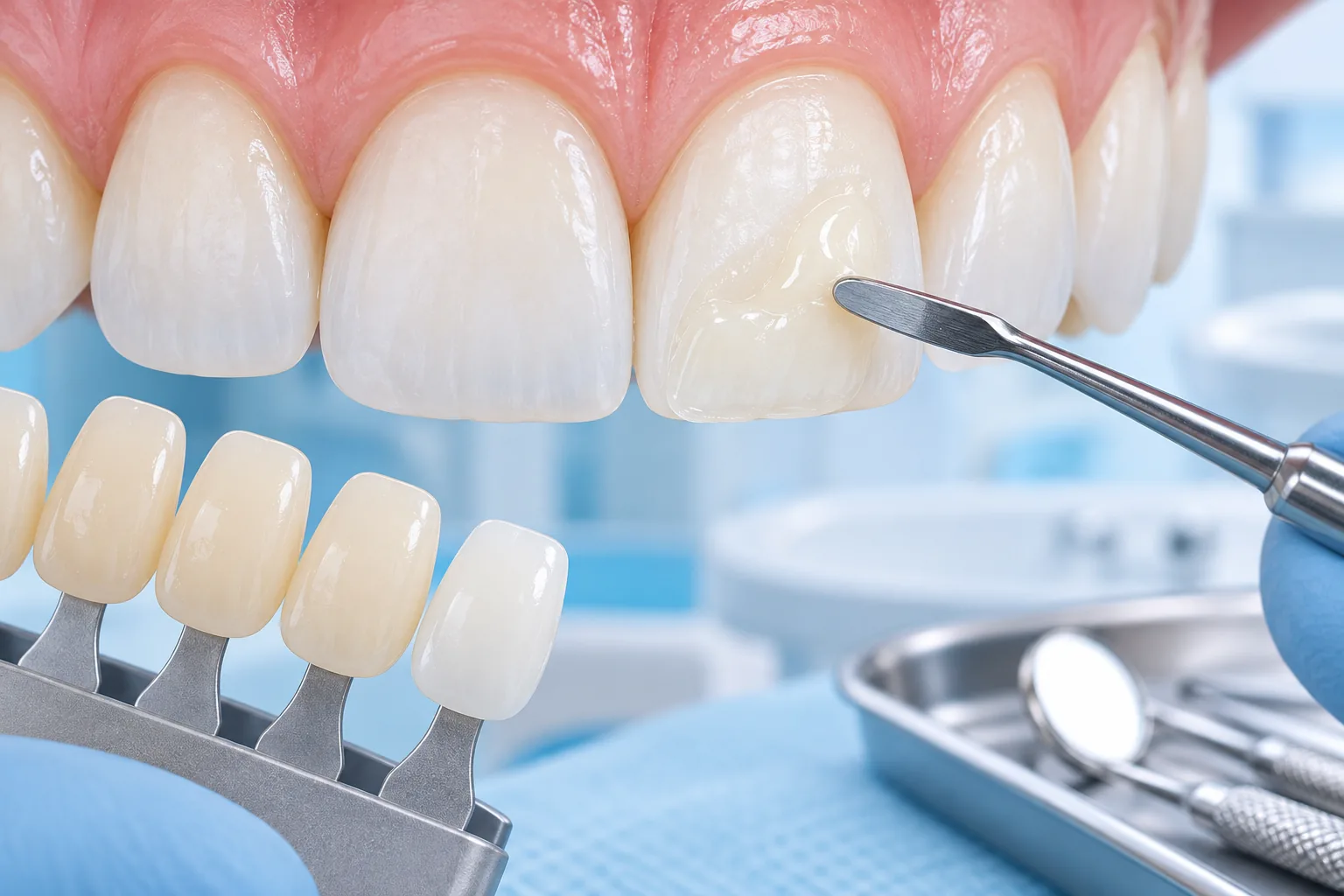
It is the rebuilding of the visible part of a tooth with a dental material chosen to match its shape and colour. Tooth-coloured composite is often applied in layers, shaped and polished directly in the mouth.
A restoration can replace missing tooth structure and improve symmetry at the same time, but it does not replace a proper diagnosis and is not suitable for every situation.
When might it be considered?
Reasons to ask for an assessment include a small chip or crack, a worn edge, damage to an older restoration, a small gap, discolouration or an uneven shape. Pain, sensitivity or food trapping should also be assessed.
If much of the tooth is missing, decay is deep or biting forces are high, another restorative option may be more appropriate.
How is the tooth assessed?
The dentist examines the tooth, gums and bite, and checks the depth of the defect and the amount of healthy structure that remains. An X-ray may be needed to look for hidden decay or changes around the root.
The neighbouring teeth, smile line and the patient’s expectations are considered when planning the shape and shade.
Main treatment steps
The surface is cleaned, damaged tissue is removed when necessary, and local anaesthetic may be used. Material of the selected shade is placed in layers, shaped, hardened, adjusted and polished.
The extent of treatment depends on the size and position of the defect, the bite, previous restorations and how much healthy tooth can be preserved.
What may be felt afterwards?
Numbness of the lip or cheek can remain for a while after local anaesthetic. Temporary sensitivity to cold or biting may occur during the first few days.
If the restoration feels high, pain becomes stronger or does not settle, the dentist should check the bite and the tooth.
Care after treatment
Brush twice daily with fluoride toothpaste and clean between the teeth every day. Do not use teeth as tools or bite very hard objects.
Regular reviews help the dentist check the margins, colour, contact with neighbouring teeth and the surrounding gum.
When to contact the dentist again
Arrange a review for persistent or worsening pain, swelling, a chip, a sharp edge, a loose restoration or a noticeable change in the bite. Rapidly increasing swelling or feeling generally unwell needs urgent assessment.
Frequently asked questions
Does the tooth always need drilling?
Preparation depends on the defect. Very little tissue may be removed for a small correction, while decay or a damaged old restoration can require more treatment.
Can the restoration change colour?
Composite may pick up staining from food, drinks or tobacco over time. A dentist can advise whether polishing or replacement is appropriate.
How long will it last?
A fixed lifespan cannot be guaranteed. Longevity depends on the size of the restoration, the bite, habits, oral care and regular reviews.
This material is for general information. A dentist determines the diagnosis and final treatment plan after an examination and discussion of the available options.
Sources
Need advice or an appointment?
Appointments every day, 09:00–23:30.